
At some point, almost everyone with a period has wondered if you can actually swim on your period.
Maybe you were invited to the beach. Maybe your family planned a pool day. Or maybe you were already in your swimsuit when your period showed up unannounced (rude, right?)
And your brain starts throwing questions like:
Will everyone know?
What if I leak?
Does the water stop my period?
And…do sharks really care about this?
Periods are still surrounded by a lot of myths, and swimming seems to collect a whole bunch of them.
Here are 10 things no one really tells you about swimming on your period.
1. Your Period Doesn’t Actually Stop You From Swimming
This might sound obvious once you hear it, but many people grow up thinking their period means no swimming allowed.
Medically? There’s no rule like that.
You can still swim, exercise, and do your normal activities during your period. In fact, many competitive swimmers race while they’re on their period.
Your body isn’t suddenly fragile because you’re menstruating. It’s just doing its normal monthly job.
Of course, if you’re feeling tired or crampy, resting is completely okay too. But if you feel like jumping in the pool? You absolutely can.
2. Water Doesn’t Magically Stop Your Period
Some people say your period stops when you’re in water.
Sounds convenient, right?
Well… not exactly.
Your period doesn’t stop. What happens instead is that water pressure can slow the flow a little while you're submerged.
But the moment you get out of the water, gravity comes back into play and your flow continues like normal.
So if you’ve ever gotten out of the pool and it suddenly flows, yep. Totally normal.
3. Swimming on Your Period Isn’t Dirty
This is another idea that makes people nervous about swimming.
But swimming during your period isn’t unhygienic.
Pools are treated with chemicals like chlorine or bromine, which help kill bacteria and keep the water safe.
Also, the amount of menstrual blood during a whole period is surprisingly small.
On average, a person loses about 35 to 50 milliliters of blood during their entire cycle. That’s about 2 to 4 tablespoons.
So even if a tiny bit escaped into the water, it would be diluted instantly.
No dramatic red clouds. No movie scenes. Just normal pool water.
4. Yes, You Will Still Bleed (But You Probably Won’t Notice)
Another worry people have is leaving a trail of blood behind them in the pool.
But that’s not really how it works.
Because of the water pressure and the huge amount of water around you, any small amount of blood would be invisible.
Plus, most swimmers wear some form of period protection, which helps prevent leaks.
So if you’re imagining the pool turning red like a cartoon, you can relax.
5. Pads and Water Are…Not Friends
Pads work great on land. But in water? Not so much.
Pads are designed to absorb liquid, which means they’ll absorb pool water too. Pretty quickly, they get soaked and lose their shape. They may also stop sticking to your swimsuit.
In other words, they’re not really made for swimming.
That’s why people usually choose other options if they plan to swim.
6. There Are Actually Several Period Products You Can Swim With
Many people think tampons are the only option for swimming. But there are actually a few choices.
Tampons
These are the most common option. They sit inside the vagina and absorb menstrual blood before it leaves the body. It’s best to insert one before swimming and change it afterward since it can absorb a bit of water too.
Menstrual cups
These are flexible cups made from silicone or rubber. Instead of absorbing blood, they collect it. They can stay in place for up to 12 hours, which is great for long beach days
Period swimwear
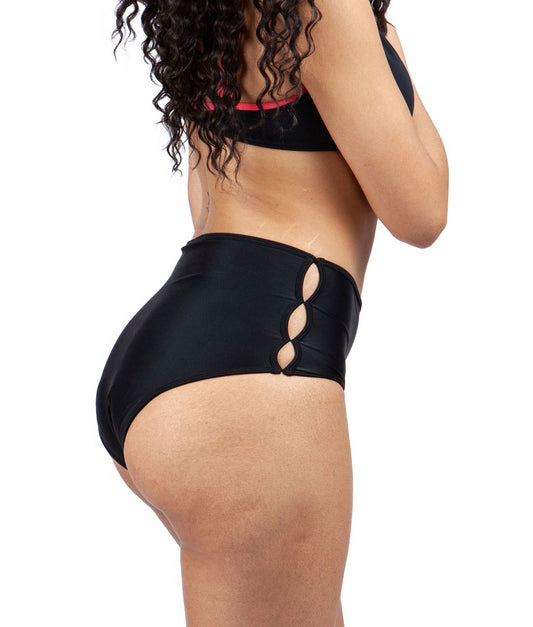
This one is becoming really popular. Period swimwear has built-in absorbent layers that trap leaks and help you swim with more confidence. Some styles can hold about the same amount as three regular tampons.
So yes, there are options where you can choose what feels most comfortable for you.
7. Swimming Might Actually Help Your Cramps
Here’s something surprising.
Exercise (including swimming) can sometimes help relieve menstrual cramps.
When you move your body, it releases chemicals called endorphins. These act like natural pain relievers and can improve your mood.
Plus, water has a relaxing effect on the body.
The buoyancy of water supports your weight, and the gentle movement can help relax muscles in your back and stomach.
So if you’ve ever felt a little better after swimming during your period, your body wasn’t imagining it.
8. Sharks Aren’t Interested in Your Period
Okay, we have to talk about this myth.
Yes, sharks can smell blood in water.
But there is no scientific evidence that menstrual blood attracts sharks or increases shark attacks.
In fact, statistics show that over 80% of shark attacks involve men.
Marine researchers have even shared stories about diving while on their period with sharks nearby and nothing happened.
So unless you’re planning to swim with fish bait in your pocket, sharks probably have other things on their mind.
9. Even Professional Athletes Deal With Periods
If you’ve ever watched Olympic swimmers and wondered how they handle their periods, well, they deal with it just like everyone else.
Many athletes use tampons or menstrual cups during competitions. Some use birth control methods to manage their cycle.
But today, there are more options.
Some swimmers also use period swimwear as an extra layer of protection, especially on lighter flow days. Period swimwear uses thin absorbent layers that trap menstrual fluid while still looking and feeling like regular swimwear.
Swimming organizations even acknowledge it as an option. Guidance for aquatic participants notes that period swimwear or period pants can be worn during training or competitions in some settings.
Because the truth is simple: having a period doesn’t mean you can’t be strong, active, or competitive (but it doesn’t mean you don’t have to slow down, be soft and steady too. We’re both!!)
10. You’re Definitely Not the Only One in the Water on Your Period
Here’s something that might make things feel a little less awkward.
Around 1.8 billion people menstruate every month.
That means if you’re at a crowded pool or beach, there’s a good chance someone else in the water is also on their period.
You just don’t notice it, and neither does anyone else.
Periods are a normal part of life. Once you realize that, swimming during your cycle starts to feel a lot less like a big deal.
A Little Extra Confidence Goes a Long Way
If you’re still feeling a little nervous about swimming during your period, that’s completely normal. A lot of people worry about leaks or discomfort, especially if they’re new to it.
That hesitation is exactly why period swimwear was created in the first place.
For many people, insertion products like tampons or cups can feel intimidating, especially if you’re younger, new to your period, or simply prefer not to use them. Others just don’t want to think too much about which product to use before jumping in the pool.
Savvi Wear designed leak-proof swimwear to make swimming during your period feel simple and stress-free. The absorbent protection is built right into the swimsuit, so you can wear it just like regular swimwear with no complicated steps or extra decisions.
In other words, you can just put it on and go swim.
For lighter flow days, many people wear period swimwear on its own. On heavier days, some prefer pairing it with another product for extra confidence. Either way, it helps remove a lot of the barriers that used to make swimming on your period feel intimidating.
If you’re curious what that looks like, you can explore Savvi Wear’s leak-proof swimwear collection to see styles designed specifically for swimming during your cycle.
Because your period shouldn’t be the reason you sit out on a beach day, skip swim practice, or stay on the sidelines at the pool 🧡